
Cheque Bounce in India: Legal Remedies, Penalties & Expert Legal Assistance
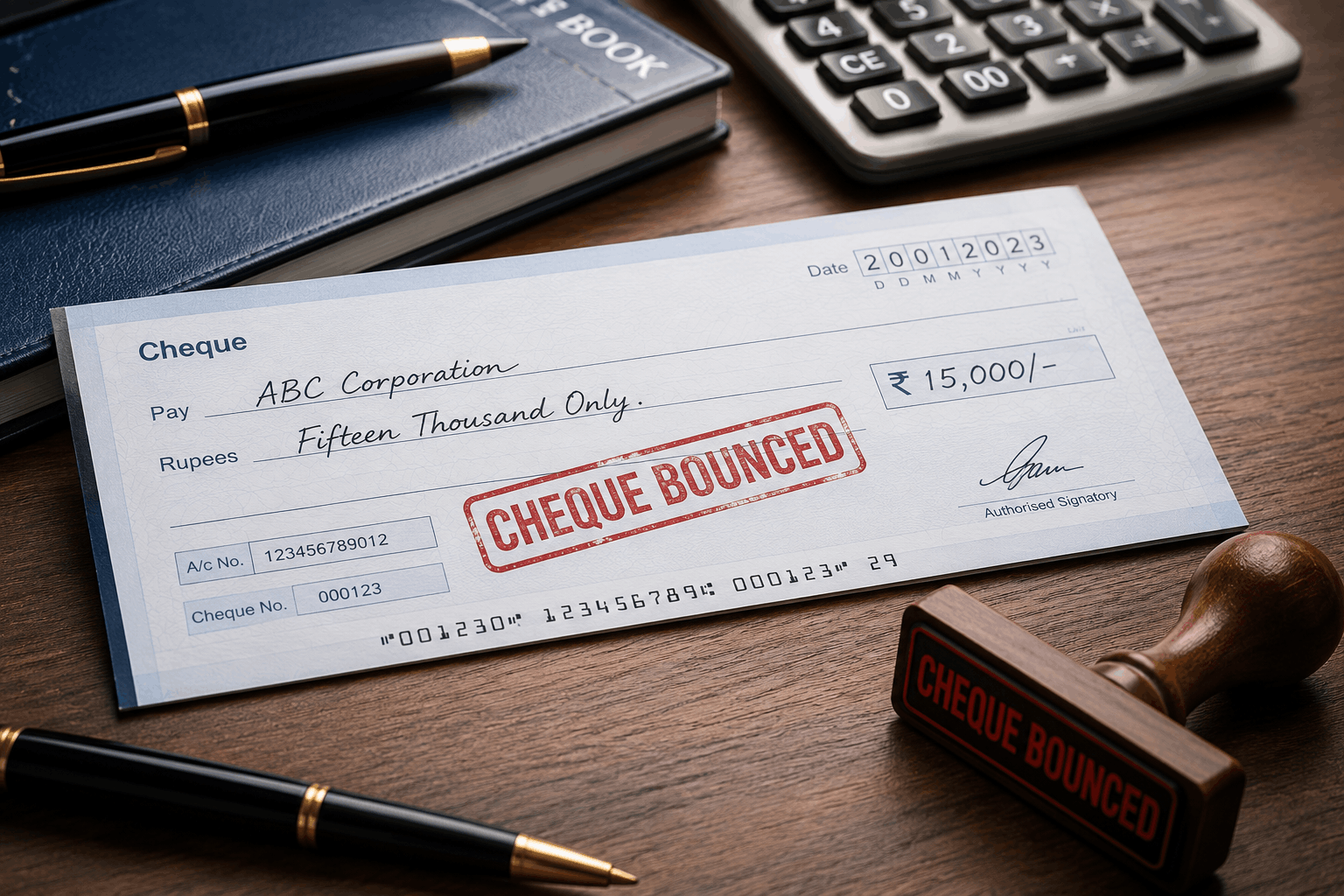
A cheque is one of the most commonly used financial instruments for business transactions, loan repayments, rent payments, and commercial dealings. It represents a promise that the issuer has sufficient funds in their bank account to honor the payment. However, when a cheque is returned unpaid by the bank due to insufficient funds or other valid reasons, it is known as a Cheque Bounce or Cheque Dishonour.
In India, cheque bounce is a serious legal matter governed by Section 138 of the Negotiable Instruments Act, 1881. The law provides legal protection to the payee and ensures that individuals and businesses maintain trust in financial transactions. Whether you are an individual, business owner, supplier, lender, or company, understanding your rights in cheque bounce cases is essential.
What is a Cheque Bounce?
A cheque bounce occurs when a bank refuses to honor a cheque presented for payment. The bank returns the cheque along with a “Cheque Return Memo” mentioning the reason for dishonour.
Some common reasons include:
- Insufficient balance in the account
- Account closed
- Signature mismatch
- Payment stopped by the drawer
- Post-dated cheque presented early
- Incorrect cheque details
- Overwriting or damaged cheque
- Frozen bank account
- Expired or stale cheque
- Technical banking issues
Among these, insufficient funds is the most common reason and attracts legal action under Section 138 of the Negotiable Instruments Act.
Legal Provisions under Section 138
Section 138 of the Negotiable Instruments Act was introduced to promote the credibility of cheque transactions. If a cheque issued for repayment of a legally enforceable debt or liability is dishonoured due to insufficient funds, the drawer may face both civil and criminal consequences.
For a successful case under Section 138, the following conditions must generally be fulfilled:
- The cheque must be issued towards a legally enforceable debt or liability.
- The cheque should be presented within its validity period.
- The cheque should be dishonoured by the bank.
- The payee must send a legal demand notice within the prescribed legal timeline.
- The drawer fails to make payment within the stipulated period after receiving the notice.
Failure to comply allows the payee to initiate criminal proceedings before the appropriate court.
Common Situations Leading to Cheque Bounce Cases
Cheque bounce disputes frequently arise in:
- Business transactions
- Loan repayments
- Property transactions
- Vendor and supplier payments
- Security cheques
- Partnership disputes
- Employment settlements
- Rental agreements
- Corporate contracts
- Personal borrowings
Both individuals and companies can become parties in cheque dishonour litigation.
Consequences of Cheque Bounce
Ignoring a cheque bounce matter can lead to serious legal consequences, including:
- Criminal complaint before the Magistrate
- Court summons
- Financial penalties
- Compensation to the complainant
- Criminal conviction
- Imprisonment as per applicable law
- Damage to business reputation
- Adverse impact on financial credibility
Timely legal advice can help protect your rights and avoid unnecessary complications.
Legal Procedure in a Cheque Bounce Case
The legal process generally includes the following stages:
1. Dishonour of Cheque
The bank returns the cheque along with a return memo specifying the reason for dishonour.
2. Issuance of Legal Notice
The payee sends a legal notice demanding payment within the prescribed legal period.
3. Waiting Period
The drawer is given an opportunity to make payment after receiving the notice.
4. Filing of Complaint
If payment is not made, the complainant may file a complaint before the competent Magistrate.
5. Court Proceedings
The court examines documents, records evidence, hears both parties, and decides the matter according to law.
Documents Required
To pursue a cheque bounce case, the following documents are generally required:
- Original cheque
- Bank return memo
- Legal notice
- Postal receipt or courier proof
- Delivery confirmation
- Loan agreement or transaction documents (if available)
- Bank statements
- Identity documents
- Supporting correspondence
- Any written acknowledgment of debt
Proper documentation significantly strengthens the legal case.
Defending a Cheque Bounce Case
Every cheque bounce case has unique facts. A person accused in a cheque bounce matter may have valid legal defenses depending upon the circumstances.
Possible defenses may include:
- No legally enforceable debt
- Cheque issued as security
- Cheque lost or stolen
- Signature disputes
- Material alterations
- Payment already made
- Fraud or coercion
- Invalid legal notice
- Time-barred liability
A knowledgeable legal professional can evaluate the available evidence and prepare an effective defense strategy.
Importance of Legal Representation
Cheque bounce litigation involves procedural requirements, documentary evidence, limitation periods, and court appearances. Professional legal representation helps in:
- Drafting legally valid notices
- Filing complaints within limitation
- Preparing documentary evidence
- Cross-examining witnesses
- Negotiating settlements
- Representing clients before courts
- Protecting financial interests
- Ensuring procedural compliance
Experienced legal assistance often improves the chances of achieving a favorable outcome.
Settlement of Cheque Bounce Cases
Many cheque bounce disputes are resolved through mutual settlement before or during court proceedings. Settlement offers several benefits:
- Saves litigation costs
- Faster dispute resolution
- Avoids prolonged court proceedings
- Preserves business relationships
- Reduces stress
- Flexible payment arrangements
- Legally enforceable settlement terms
Negotiated settlements are often the preferred solution for commercial disputes.
Preventing Cheque Bounce Issues
Businesses and individuals can reduce the risk of cheque bounce by following good financial practices:
- Verify account details before issuing cheques.
- Maintain sufficient account balance.
- Record all financial transactions.
- Use written agreements.
- Issue cheques only for genuine liabilities.
- Monitor cheque validity.
- Avoid unsigned or incomplete cheques.
- Keep copies of issued cheques.
- Maintain transparent communication with counterparties.
- Seek legal advice before initiating litigation.
Why Choose Professional Legal Assistance?
An experienced cheque bounce lawyer understands procedural requirements and can provide comprehensive legal support from notice drafting to court representation. Professional assistance ensures timely action, accurate documentation, strategic legal advice, and effective representation before the appropriate judicial forums.
Whether you are a complainant seeking recovery of your money or a defendant facing allegations under Section 138 of the Negotiable Instruments Act, obtaining timely legal guidance can make a significant difference in protecting your rights and resolving the dispute efficiently.
Conclusion
Cheque bounce cases are among the most common financial disputes in India. The law provides effective remedies for genuine claimants while also protecting the legal rights of accused persons. Prompt legal action, proper documentation, and experienced legal representation are key to achieving a fair and timely resolution.
If you are dealing with a cheque bounce matter, do not delay seeking professional legal advice. Early legal intervention can help safeguard your financial interests, minimize litigation risks, and ensure compliance with all statutory requirements under the Negotiable Instruments Act.